


San Andrés Larráinzar is one of the most important textile references in the
Chiapas Highlands. Its huipiles stand out for the richness of their backstrap
loom brocades, combining rhombuses, frets, flowers, and symbols representing
elements of the cosmos.
The central rhombus, present in many huipiles of the region, is associated with the four cardinal points — a motif that can be traced back to Classic Maya period textile representations.
The brocades of Larráinzar are characterized by their great density and precision, requiring deep knowledge of the loom and traditional design systems.
Curiosity:
Some ceremonial huipiles can take several months to complete due to the complexity of their brocades.
Techniques
-
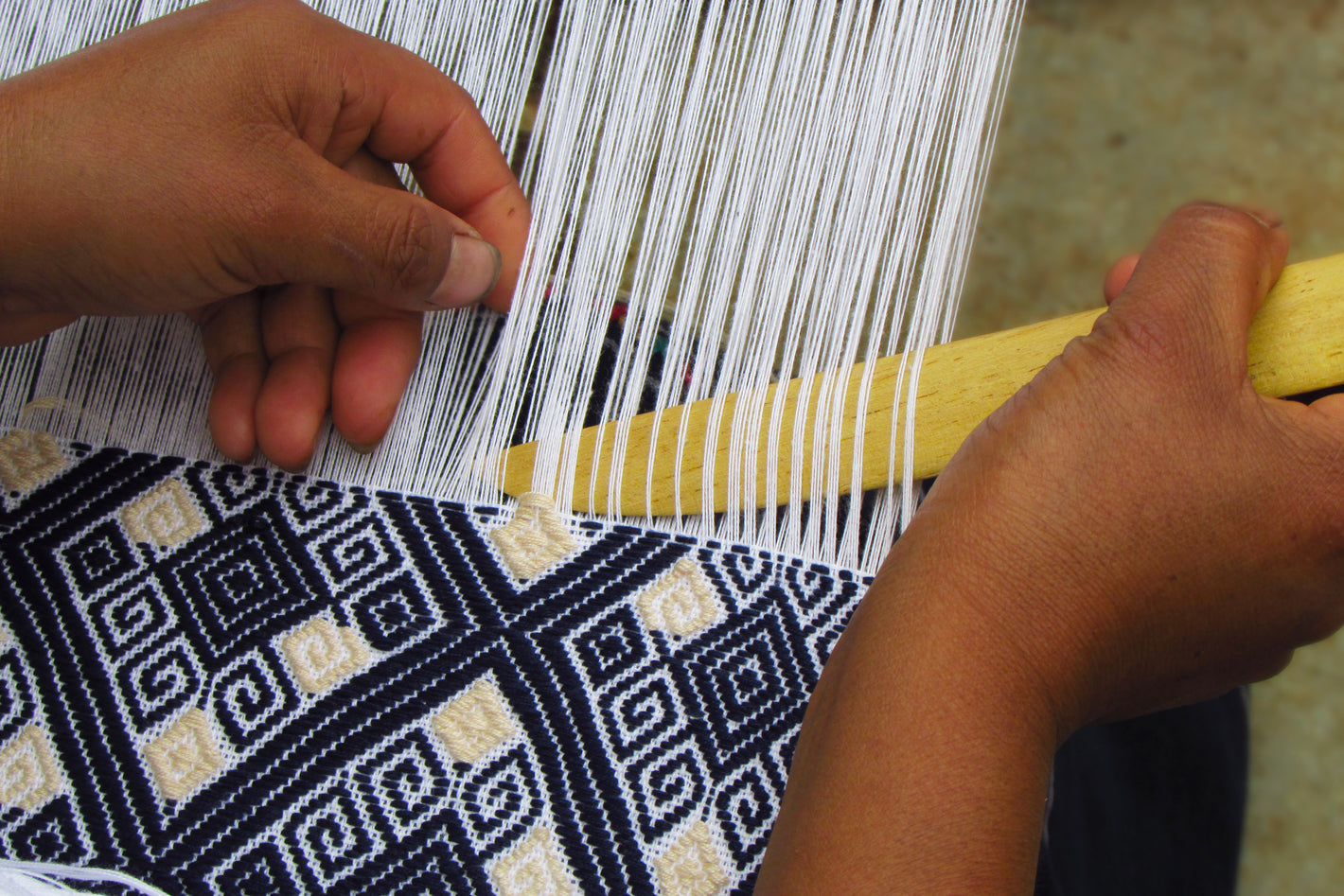
Interlaced brocade
he motifs (diamonds, rhombuses, and zoomorphic figures) are woven simultaneously with the fabric using contrasting colored threads that become integrated into the weave structure. -
Plain weave and stripes
The foundation of the local textile: plain weave integrates warp and weft uniformly, while stripes add visual rhythm through the alternation of colors.
